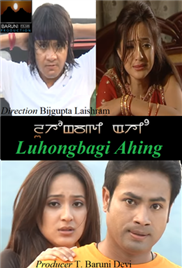
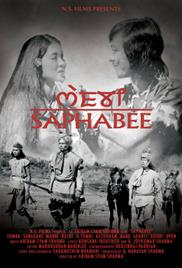
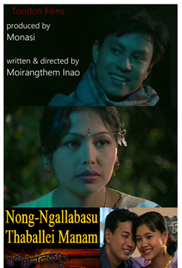
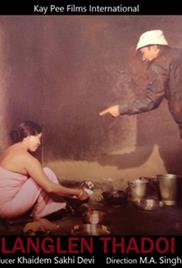
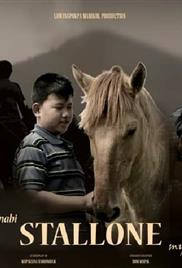
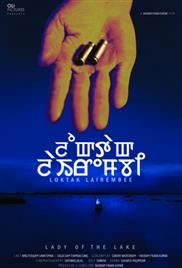
Sakhi is a divorced woman who is a dancer at the State Dance Academy. One day, a thief falls in love with her after seeing her performance and in order to gain her attention he steals her horse.
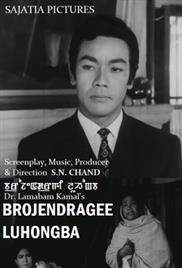
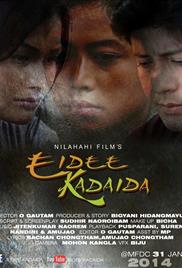
Gautam, an artist, determined to uphold his freedom, is torn between his two loves, both only too gentle in their demands, and yet deeply caring. A sensitive man, he chooses art, knowing full well that he lets them down. While Indu would like him to change his lifestyle just a little bit, for recognition and comfort, Keinatombi would be happy to give him the little care and comfort that she thinks he needs for his art. For the time being at least, Gautam would go with her.
The film depicts a middle-class family torn between traditional and modern values. Tonsna, the retired patriarch, watches as his sons, Ibohal and Ibotombi, and daughter, Tondonbi, navigate conflicting ideals. Ibohal's old-school ways clash with his wife Tampak's desires for domesticity, while Ibotombi rebels against outdated norms. Tondonbi seeks liberation amid societal pressures. As the family faces fragmentation, they ultimately find empathy and unity, choosing to embrace their differences for a happier future together.
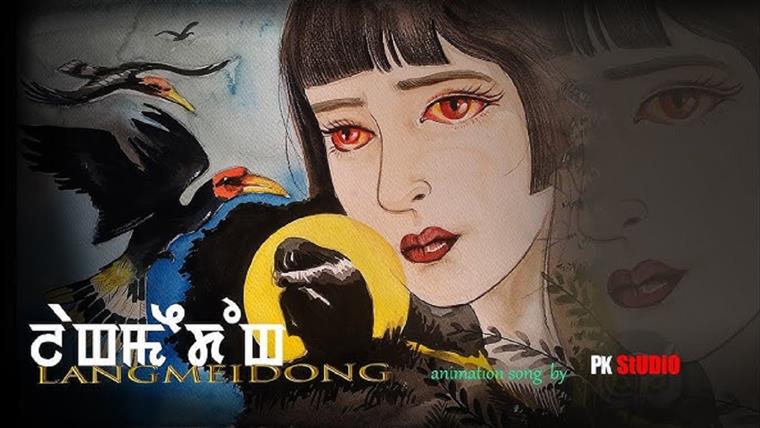
The story of Uchek Langmeitong or Chekla Langmeitong is a Meitei folktale of Ancient Kangleipak. It is the story of a girl named "Hayainu" who turned herself into a Langmeitong as she was unable to suffer the ill treatments of her cruel stepmother.
Melodrama featuring criminal violence in Imphal, the (for most Indians) exotic capital of Manipur. It addresses issues like unemployment, drugs and the nexus between an oppressive state power and an entrenched feudal elite through the story of a widow, Nungshi (Memi), and her son Ibungobi (Master Tony). When the independent-minded Nungshi is gang-raped and becomes a crazed beggar, her son joins a group of criminals operating in Imphal’s ‘Golden Market’. Ibungobi eventually realises that the beggar is his mother, but is too late to help her even though one of his criminal friends is a local politician.
When a righteous newspaper editor Leishemba gets kidnapped and murdered by a corrupt politician to cover his scandal, his younger brother Ningthem who is about to become an IAS officer sets out to seek revenge.
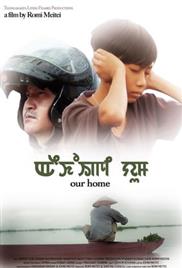
The film tells the story of the impact of globalization on a small remote village which causes the residents to move away in an attempt to eke out a livelihood.
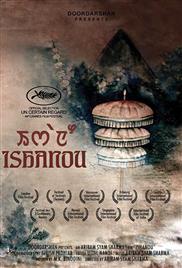
The harmony in a family in the Manipur Valley, is disrupted by the sudden transformation of a gentle, young wife into a violent woman prone to fits of wild visions. She then goes in search of the Meibi Guru, whom she thinks has chosen her to be initiated into the sect. Her pleasure then lies in the devotion and love through dances and music. She finds total solace in the vivid and colorful performing arts.
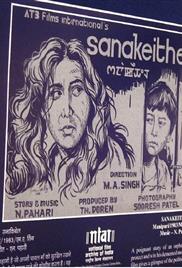
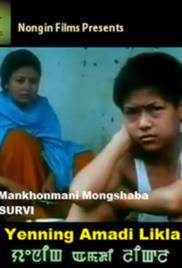
A teacher comes to a village and an old man asks her to tutor his grand son who is sickly all the time. The teacher becomes curious to know about the old man and the boy. She finds out from a colleague that the boy's mother had been seduced by a man and dies in child birth. It turns out that the father is husband of her cousin who is promptly apprised of the fact. Her cousin is attracted to the unfortunate boy and adopts him while her husband is absent. Subsequently the husband returns home and objects to the boy being adopted for he does not know it is his own son. The grand father wants to take the boy back but the step mother does not listen to it and ultimately keeps the boy.
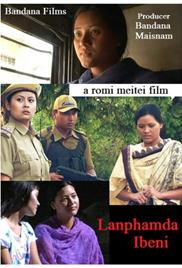
A fine illustration of the Manipuri legend which asserts that a lily from the hills of Seroy can only survive in its natural original setting. The story of Joy and Ibeni is beyond the permissible limits, for their love marriage was considered as immoral because they were cousins. One day Joy sees the despairing Ibeni who tries to hang himself from a tree. She saves him in the nick of time but then they have to confront the scorn of the village and are forced to settle down elsewhere where they are considered foreigners. They return to their native village on the occasion of the death of Ibeni`s father. Their son, who has grown into a handsome young man repeats the fault of his parents and elopes with his beloved. When Joy dies the villagers prevent the funeral rights from being carried out.
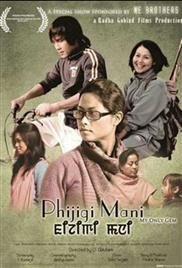
Manileima, a 35-year-old independent woman is the second wife of a contractor. She lives separately with her mother and son. One day her son injures his hand and is hospitalized. In the
hospital different people come to their help, but one man, a stranger, helps them the most. This stranger and her nephew, Geet, start sharing a close bond. Slowly Manileima gets attracted to this stranger through Geet's stories and the stranger's affection for her child but they never meet face-to-face. Days pass and finally on the day of her son's discharge; she decides to make a choice for herself.
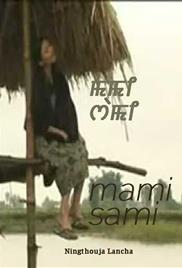
Set against the beauty of Loktak Lake, “Mami Sami” follows the heartbreaking journey of Tayal, a spirited village girl caught between love, loss, and insurgency, in a powerful tale of resilience, emotional awakening, and survival amidst the chaos of conflict-torn Manipur.
Parshuram who grows up on his own. His maternal uncle sells his mother to a cruel rich man. He perceives that all these happenings are caused by his father who neglects them. And he takes a vow to kill his estranged father when he finds him.
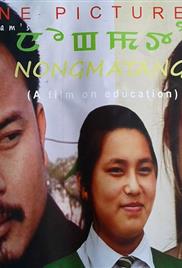
The film explores the different life styles of modern India. In urban society corruption is rife, careers advanced by bribes and influence. But there is an alternative: life in the hills, where the people face life silently and accept nature's gifts. In this ultimately optimistic film, a Manipuri youth lives through personal pain and disappointment to face with new hope and energy the struggle of his family for a different way of life.
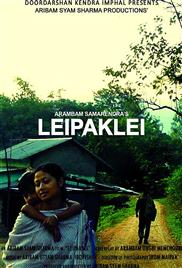
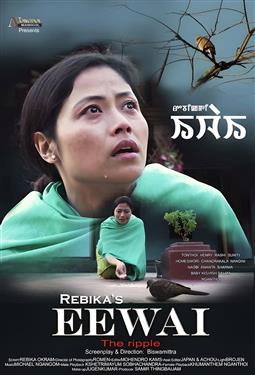
The film Leipaklei tells the story of Leipaklei, a woman named after a Manipuri flower. Like the flower whose habitat is the hard ground, she is surrounded by hard trials and ironies of fate: separation from the one who loved and is still loved by her, abandonment by her husband, the trials of being a single parent, the violence of the gaze of men who sees her as fair game. Not unlike the flower Leipaklei, which hibernates beneath parched grounds - dreaming for a spring past, the protagonist dreams of the return of her beloved. He returns.
Rajarshi Bhagyachandra of Manipur is one of the greatest Vaishnava Kings. A versatile person of immense qualities, he was an expert war strategist who wielded his sword to defend his land and people and yet an artistic genius of divine sensibilities who gave the world the classical dance of Manipuri Ras.
Dwells into the mysticism and aestheticism of the indigenous percussion music of the Meitei of Manipur. The film brings out the beauty of the Meitei artistesin lively performance. The Meitei pung the barrel shaped Manipuri drum, is focussed as an essential part of Mnipuri life and culture.
Manipuri martial art is called Thang-Ta (sword and spear). It is dedicated to fighting skill and worship. The Meitei creation of Thang-Ta goes back to antiquity. Ashiba was asked to create the Universe by his father Atngkok Shitaba. The movement and pattern of creation, ritualistically known as Thengou, was revealed in human movement patterns of Thang-Ta. Today Thang-Ta has passed into oblivion, and survives in isolation. The film traces elements of this art against the blend of martial and spiritual elements in the psyche of the Manipuri people.
The film deals with the freedom frighter movement in Manipur,emphasing on the contributions of the Manipur women in resisting the British Rule in Manipur. The essence and importance of Nupilal (women war) is the highlight in this film. The film also narrates the role of the India National Army, INA its struggle against the British rulers.
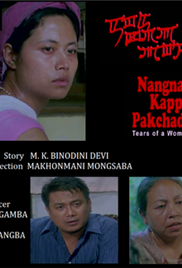
A simple village girl much deprived in life Nungshithoi tells her aggrieved story to her lawyer, bit by bit about the betrayal by her lover who discards her after having an illegitimate child. The young lawyer stands up for mistreated women to give them respect and courage.
Mangang Leima of Mayang Imphal Thana Leikai, a student of Khuman Maheikon reading in standard ten, happened to be near a shop where a bomb was hurled by miscreants and she quickly picked up the bomb and threw it out. She saved several people’s lives by her courageous act. So she was given a bravery award
An ill-fated lady fights for survival but uses illegal means by involving herself in drug business, steals gold and other precious jewelleries. But all the money and stuffs she stole are used for her children's education and welfare. After her children completes the education, she gets caught by a police team during her last consignment related to drugs, she didn't run away this time but accept her wrongdoings.
The film tells the agony of a mom whose little child dies premature. Within the Meitei group of Manipur, a baby who dies earlier than he attains the age of three years is taken into account a nasty omen to the household and all customary post-mortal ceremonies are deprived. However, for a mom, her child shall all the time be her little one without contemplating the age.
“Iche Tampha” is a poignant tale of Tampha, a woman oppressed by her stepmother but cherished by her father. Her love for Leimahan’s son faces opposition from his mother. Tragedy strikes when they elope and he’s hospitalized after an accident. Forced into a loveless marriage and motherhood, Tampha is abandoned and struggles to survive in Assam. She faces further danger but fights back, seeking refuge under a tree. Her resilience shines as she navigates hardship, protecting her child and herself against all odds.
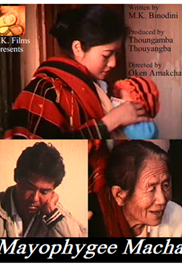
Melodrama about three women from the Tangkhul community in the Manipuri hills. The story is told in flashback after a young girl, the daughter of Mayophy raised by her widowed grandmother, writes to the narrator having been selected to represent India in the Asian Games. The three women evoke the pristine, mountainous landscape even as they encounter modernity and urbanisation.
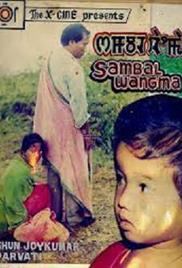
Thambal, a young lady is brutally raped by a Minister's son Rocky. But the charges for the heinous crime falls upon Chinglen, Thambal's boyfriend. Rocky's father uses various powerful means to confine Chinglen inside a jail. But Chinglen's urge for revenge spreads like a wildlife. He espaces from the police and skilfully takes lives of all those involved in Thambal's murder one after another. Justice is finally served.
Manipur is the easternmost state of the Indian Union [where there has been a rising insurgency aiming for secession]. The AFSPA is a legislation enabling the armed forces of the union to exercise unguided power with immunity. Besides the power to search and arrest on mere suspicion, the Act sanctions even non-commissioned officers to shoot and kill any person.
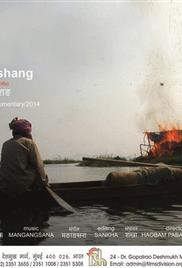
In 2011, Manipur government burnt down hundreds of huts in Loktak Lake, North East India in the pretext of cleaning the lake and blaming the locals for the pollution of the lake. Thousands of fishermen were displaced, became homeless and their livelihood snatched. With nowhere to go the fisherman still continue to fight the authorities. They continue to fight a losing battle where the authorities are even questioning their being a native of the lake since they live on floating huts built on floating biomass.
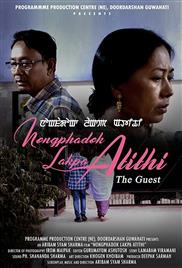
Ahum, a tribal from the hills who is going to Imphal city in the valley to meet his daughter before she leaves for New Delhi in search of a job. During the course of the journey he encounters different people and their stories, making us a witness to the cruelty of ethnic conflicts.
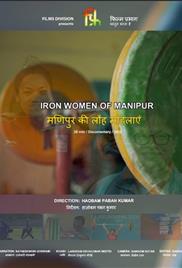
A tribute to the sports personalities of the country who have contributed immensely to the development of women in sports.The film follows the inspiring stories of the pioneers of women weightlifters, from N Kunjarani Devi, Padmashri Awardee 2011 and Anita Chanu, Dhyanchand Awardee to the present-day weightlifting sensation of India Mirabai Chanu, Padmashri Awardee 2018.
A tragic sequence of drama, rivalry and fights ensues after Thabaton elopes with Yaima, son of a rich egoistic businessman who disrespects the girl's family.
Love between Shandhyarani and Shailesh that begins on chance meeting under a tree on a rainy day, and it ended up with a tearful note, torn apart by circumstances. The blossoming love between them is marred by the poverty of Sheilesh's family, as he is unable to secure a foothold in society since he doesn't have the means. In the final twist to the story, Shadhyarani is married off to another person by her parents. Oblique to fulfill her parents' wishes, Shandhyarani bides a tearful farewell to her lover, who in the meanwhile had left home never to return.
Manipur has many folktales that's binded with the land thousands of years ago. Some of the tales are remake as animated video. Some of the animated video people anticipated most.
Suggestion for the content
We value your insights! Share your suggestions for webpage enhancements or content you'd like to see. Your feedback is crucial for our continuous improvement.